
Forecast Dinner 2026

0

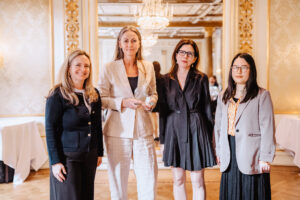
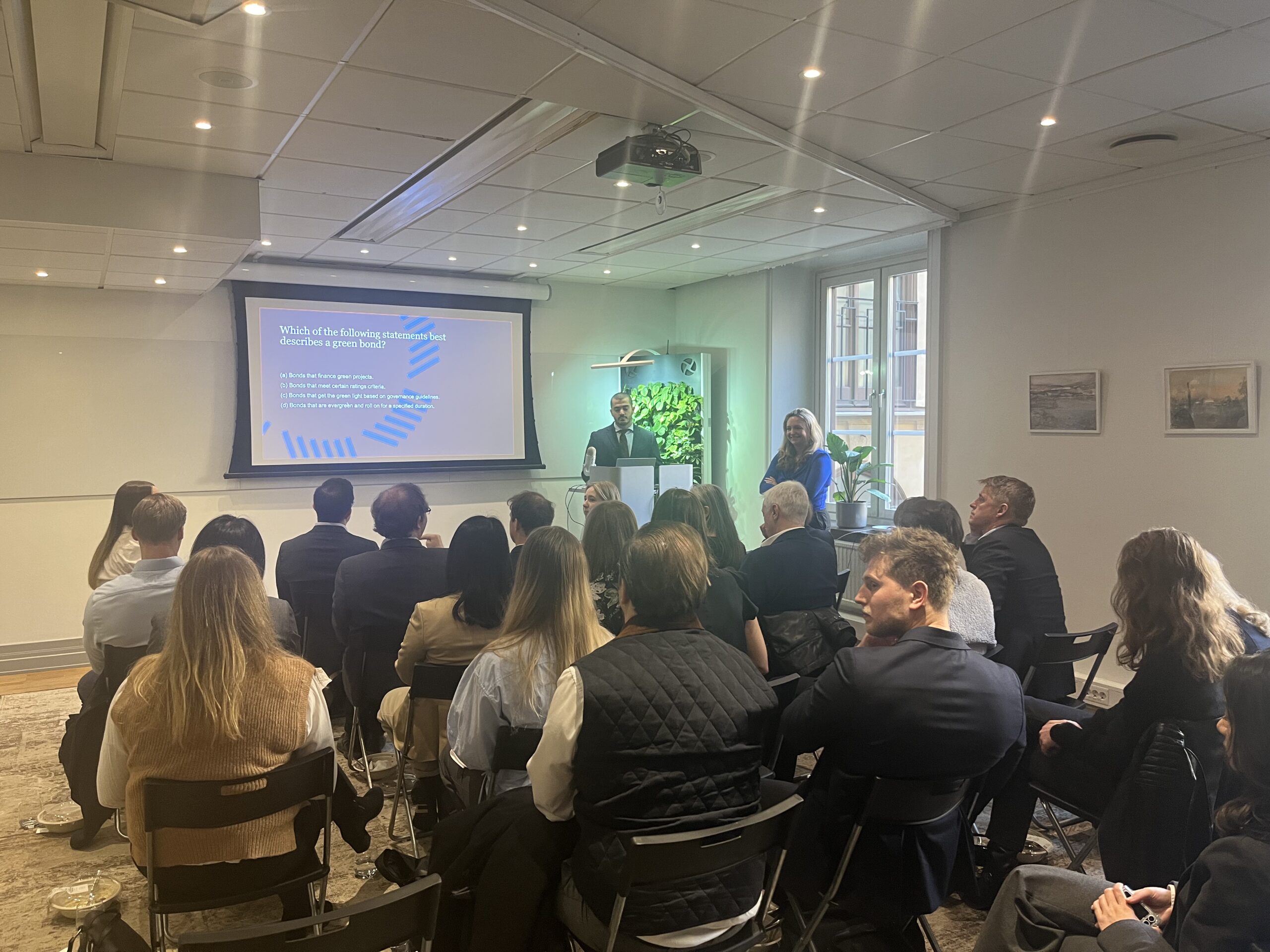
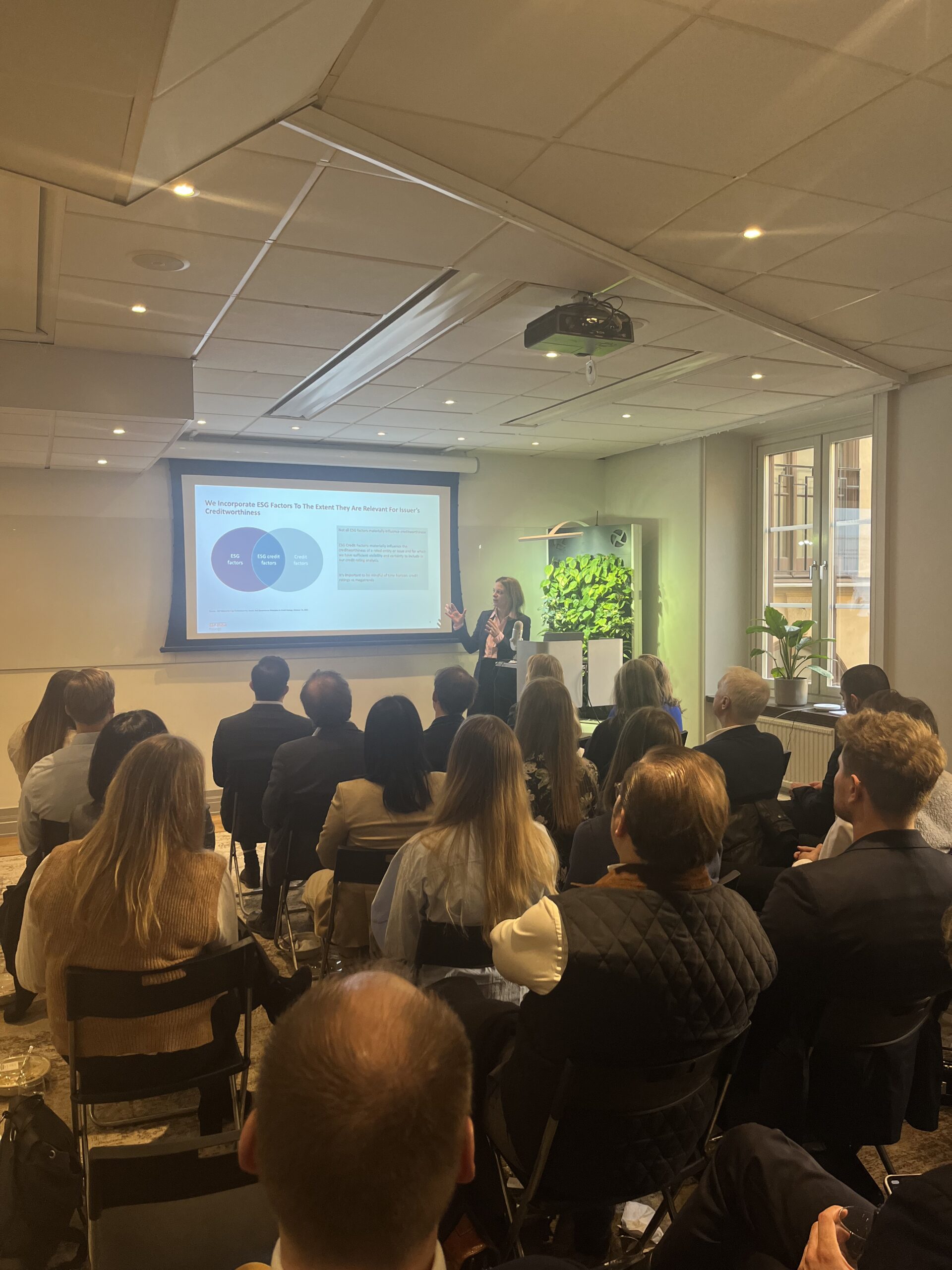
We had a fantastic evening at our 11th Annual Forecast Dinner at Gamla Riksarkivet, bringing together members and guests for an evening of insights and great company. We were delighted to welcome comedian Al Pitcher, who entertained the audience with his unique perspective on Swedish life and left us all laughing throughout the evening.

The Forecast Dinner is also an opportunity to recognize important milestones within our Society. Congratulations to our 18 new CFA charterholders on achieving this significant professional accomplishment. Earning the CFA charter reflects years of dedication and commitment to the highest standards of the investment profession.

A sincere thank you to our Platinum partner, LGT Capital Partners and Matthias Feiler for their support in making this event possible. Thank you to our annual partners BlackRock, Fidelity International and PIMCO. A special thank you to our photographer Binniam Eskender, for capturing the energy and memorable moments of the evening.

Thank you to everyone who joined us and helped make the evening such a success.

Sweden’s Performance Reporting Gap: Why Swedish Asset Managers Should Embrace the GIPS Standards

0

How do Swedish asset managers increase their chances of winning mandates from international institutional investors without altering their investment process, their philosophy, or their edge? The answer, for a growing number of firms across Europe and beyond, could simply be lying in how they report their performance.

Institutional allocators like pension funds, sovereign wealth funds and insurance companies, as well as the consultants who advise them, operate increasingly standardised manager selection processes. Requests for proposals (RFPs) are built around structured questionnaires, and the criteria applied are often binary: a firm either meets a baseline requirement, or it does not advance to the next stage. One requirement that has migrated, over the past two decades, from differentiating credential to baseline expectation is compliance with the Global Investment Performance Standards, known as GIPS.

This shift matters for Sweden. Its investment management industry is active, internationally oriented, and home to managers whose track records and investment capabilities are fully competitive on the world stage. Yet as of today, only one Swedish firm (East Capital) formally claims GIPS compliance. Denmark counts 12 compliant firms; Finland, 8; Norway, 4. Switzerland has 24; the United Kingdom, 80. The United States alone has over 1,200 . By any measure, Sweden is underrepresented in a framework that is fast becoming the global standard for credible performance reporting.
This article explains what the GIPS standards are, why asset managers across the world choose to claim compliance, and what the gap between Sweden and comparable markets represents, both as a challenge and, more importantly, as an opportunity.
What Are the GIPS Standards?

The Global Investment Performance Standards (GIPS) are a set of voluntary, ethical principles developed and administered by CFA Institute that govern how investment management firms calculate and present their investment performance to prospective clients and investors. First introduced in 1999, and most recently updated in 2020, the GIPS standards are now adopted by organisations in 54 markets worldwide, with more than 1,600 firms and asset owners formally claiming compliance1.

The foundational logic of GIPS is straightforward. Before the standards existed, the investment management industry suffered from a fundamental comparability problem. Without standardised rules governing return calculations, composite construction, and the selection of which accounts to include in a track record, asset managers were effectively free to present performance in whatever light was most flattering. Marketing departments could cherry-pick high-performing accounts, select convenient time periods, obscure important caveats, and use inconsistent valuation methodologies, all resulting in a market in which, as one observer memorably put it, every manager appeared to be an above-average performer.

The GIPS standards were designed to resolve this problem by establishing a consistent, verifiable, and internationally recognised framework. At their core, the standards require firms to: define themselves and their business boundaries clearly and consistently; group all fee-paying, discretionary portfolios into composites according to investment strategy; calculate time-weighted returns (or money-weighted returns where appropriate under the 2020 edition) using fair value inputs and standardised treatment of external cash flows; present a minimum of five years of performance history building to ten; and make available a complete list of composites and pooled funds to any prospective investor upon request.
The 2020 edition of the standards, which became effective from the period ending 31 December 2020, was a significant expansion of scope. It introduced separate dedicated chapters for firms, asset owners, and verifiers; broadened the framework to cover pooled funds with distinct reporting requirements; reinstated the use of carve-outs with allocated cash for sub-strategy presentation; allowed money-weighted returns for asset classes such as private equity and infrastructure where time-weighted returns are less meaningful; and introduced updated guidance on valuation hierarchies and the treatment of illiquid assets. The result is a framework that is now genuinely applicable across the full spectrum of asset classes and vehicle types, from traditional long-only equity mandates to private credit, infrastructure, and multi-asset strategies.

Most importantly, GIPS compliance is a claim that applies at the firm level, not the strategy level. A firm either complies for all its assets and strategies within the defined firm perimeter or it does not.

Why Firms Choose to Claim Compliance

The decision to claim GIPS compliance is voluntary, and the commercial and operational incentives to do so are increasingly compelling.

Access

The most immediate driver is access to institutional capital. Institutional investors have progressively embedded GIPS compliance into their external manager selection criteria. It has evolved from a differentiating credential into what practitioners in the field routinely describe as a hygiene factor. Research conducted by CFA Institute confirms that 68% of asset owners surveyed either require or explicitly ask about GIPS compliance when selecting managers for liquid asset strategies . In the context of RFPs, firms that cannot demonstrate compliance are increasingly filtered out before substantive evaluation even begins.

Credibility

The second driver is credibility. The GIPS compliance claim signals to the market that a firm’s performance track record has been constructed under controlled, auditable conditions. It is a statement that the numbers presented are free from selective account inclusion, convenient periodisation, or internally inconsistent methodology. For a prospective investor conducting due diligence on a manager they have not previously allocated to, this signal substantially reduces informational asymmetry. As the standards’ own governance documentation frames it, GIPS compliance promotes fair, global competition among investment firms precisely because it levels the information environment between managers and those evaluating them.

Discipline

The third and often underappreciated driver is the internal discipline that the compliance process imposes. Achieving GIPS compliance requires firms to develop and document robust written policies and procedures covering every dimension of performance measurement: how accounts are assigned to composites, how returns are calculated, how new accounts are added and terminated accounts removed, how significant cash flows are treated, and how valuations are determined for illiquid holdings. For many firms, undertaking this process reveals inconsistencies or gaps in existing practices that, once resolved, improve the quality of data available for internal portfolio analysis and risk management, not just external reporting.

Economics

The fourth driver is the favourable economics of getting started. A common misconception is that GIPS compliance necessarily entails the cost of independent verification, and that this places the standard out of reach for all but the largest firms. In practice, verification is recommended but not required. While approximately 85% of GIPS-compliant firms globally have chosen to be independently verified , this figure is heavily skewed by jurisdictions such as the United States, where institutional investors typically treat verification as a de facto requirement. Claiming compliance, however, is a separate and considerably more accessible step. It requires internal focus rather than external expenditure: documenting policies and procedures, defining composites, and ensuring consistent application of the standards across the firm. For managers whose performance measurement processes are already well organised, much of this work amounts to formalising what is already being done, making the initial claim of compliance a genuine low-hanging fruit. Verification, if and when it becomes commercially warranted, can be added as a subsequent step, allowing firms to scale their investment in the standards in line with the institutional opportunities they are pursuing.

The Global Landscape: Where Adoption Stands and Where It Is Heading

In the United States, GIPS compliance has long been standard practice at the institutional level. All 25 of the largest global asset managers claim compliance, and 85 of the top 100 do so for all or part of their business. In the United Kingdom, 80 firms claim compliance, a market where the standard is actively promoted by the UK Investment Performance Committee, co-sponsored by the Pensions and Lifetime Savings Association and the Investment Association. In Switzerland, the 24 compliant firms operate within an ecosystem actively supported by the Asset Management Association Switzerland (AMAS), which maintains a dedicated GIPS Expert Group, organises an annual GIPS Day, and coordinates the positions of Swiss practitioners on developments in the standards. The Swiss model illustrates how a structured national advocacy infrastructure can meaningfully accelerate domestic adoption.

Across the Nordic region, the picture is more varied. Denmark and Finland have materially higher uptake than Sweden relative to the size of their respective fund industries, and Norway’s compliance community, while smaller, is growing. Outside the Nordic context, markets as diverse as Australia, Japan, South Korea, and Brazil have developed active GIPS communities. The most recent CFA Institute data indicates that GIPS-compliant organisations collectively span 54 markets, with growing representation across the EMEA and Asia-Pacific regions.

A particularly notable development in the 2024 CFA Institute Asset Owner Survey is the acceleration of compliance claims among institutional investors themselves, not only among the asset managers they hire. Some 31% of asset owners surveyed reported claiming GIPS compliance, up from under 21% in 2020. Another 9% indicated they intend to do so. This expansion of GIPS into the asset owner community represents a structural deepening of the standard’s role in the global investment ecosystem. It also changes the dynamic for asset managers: a GIPS-compliant asset owner that evaluates its own performance to a disciplined standard will, almost by definition, apply an equally rigorous standard to the managers it selects.

More than 90% of asset owners surveyed report exposure to illiquid assets, with nearly half allocating between 26% and 50% of their portfolios to such holdings. This is directly relevant to the evolution of GIPS: the 2020 update was specifically designed to accommodate the complexity of illiquid strategies, and the growing guidance around alternative investment vehicles, OCIO portfolios, and private credit reflects the direction of travel in both asset owner allocation and regulatory scrutiny.

The Case for Sweden

A large part of Sweden’s investment management industry is or intends to become internationally engaged, and is increasingly subject to the same institutional screening processes that have driven GIPS adoption in other markets. Swedish fund managers compete for mandates from global institutional investors. Swedish pension capital is allocated to international asset managers who, in most cases, already claim GIPS compliance. And Swedish institutional investors such as the AP funds, large pension funds, insurance companies, or even smaller foundations are sophisticated enough to understand exactly what GIPS compliance does and does not represent.

The argument for broader GIPS adoption in Sweden is not primarily normative. It is commercial and strategic. A Swedish asset manager competing for allocation from a large European or North American pension fund is, in the absence of GIPS compliance, operating at a structural disadvantage relative to peers from markets where compliance is common. The manager is asking a sophisticated institutional investor to accept a non-standard performance presentation when standardised alternatives are widely available. In a competitive landscape where performance track records are often the primary basis for selection, this is a meaningful friction.

Conversely, a Swedish firm that achieves GIPS compliance, especially if it undergoes independent verification, can present its track record on terms that institutional investors recognise, and in many cases require. It removes a potential exclusion criterion at the RFP stage. It signals alignment with the governance and transparency expectations of the most sophisticated allocators in the global market.

There is also a reputational dimension at the level of the Swedish asset management industry as a whole. Sweden’s financial sector has consistently positioned itself as a model of governance, long-termism, and investor protection. Broader GIPS adoption would reinforce that positioning in the global institutional marketplace with a tangible, verifiable credential, one that is recognised and respected by investors in every major market.

A Practical Next Step

Achieving GIPS compliance is a structured process, but it is one that many firms find less burdensome in practice than they initially anticipate. For firms already maintaining rigorous performance measurement and reporting processes, as most professionally managed firms do, a significant portion of the infrastructure required for compliance is already in place. The incremental effort typically involves formalising and documenting existing practices, establishing composite structures, and engaging an independent verifier, if desired. It is important to note, however, that claiming compliance does not require external verification, as this significantly lowers the threshold from a cost perspective.

CFA Society Sweden is committed to supporting the Swedish investment management community in understanding and pursuing GIPS compliance. We intend to raise awareness, clarify common misconceptions, gather questions from practitioners, and explore what kind of further guidance or discussion would be useful for the Swedish market. Whether you are a firm at the beginning of the process, evaluating whether compliance is appropriate for your business, or seeking to understand the implications of the 2020 standards for your specific asset classes and vehicle structures, we welcome the conversation.

Sustainable Finance Lab Wins CFA Sweden ESG Award 2025

0

Each year, CFA Society Sweden recognizes outstanding contributions to the integration of Environmental, Social, and Governance (ESG) considerations and sustainability within the investment industry through its ESG Award.

The 2025 ESG Award was presented to Sustainable Finance Lab during CFA Society Sweden’s Annual Forecast Dinner in Stockholm.

The award recognizes Sustainable Finance Lab’s important contribution to advancing sustainable finance in Sweden through research, education, public dialogue, and collaboration across academia, industry, and policy. By bringing together diverse stakeholders and promoting evidence-based discussion, Sustainable Finance Lab has played a meaningful role in strengthening the understanding and development of sustainable finance practices.

John Howchin, member of CFA Society Sweden’s ESG Committee and responsible for the Award’s nomination process, commented on the decision:

“The jury recognised the Stockholm Sustainable Finance Centre for its long-term work in advancing sustainable finance from a systemic perspective, and for establishing an important platform where academia, the financial sector, and broader societal stakeholders come together to drive the transition toward a more sustainable and resilient financial system.”

Sustainable Finance Lab is an independent, non-profit organization dedicated to accelerating the transition to a sustainable financial system. Through research projects, publications, events, and stakeholder engagement, the organization contributes to increased knowledge and practical solutions for integrating sustainability into financial decision-making.

Previous recipients of the CFA Sweden ESG Award are:

  • 2024 – IÄF – The Institutional Owners Association
  • 2023 – Global Child Forum
  • 2022 – ChemSec – the International Chemical Secretariat
  • 2021 – Anthropocene Fixed Income Institute and Ulf Erlandsson
  • 2018 – Norrsken Foundation
  • 2017 – Corporate Human Rights Benchmark (CHRB)
  • 2016 – Örebro Kommun and Region Västmanland
  • 2015 – Steven Smit, Morningstar
  • 2014 – Mats Andersson, AP4, Liza Jonson, Storebrand AM and Gunella Hahn, Svenska Kyrkan
  • 2013 – Hennes & Mauritz AB
  • 2012 – Peter Norman, Finansdepartementet
  • 2011 – Gunilla Hjalmarsson, Meta AM. and Anna Nilsson, Swedbank Robur
  • 2010 – Sasja Beslik, Nordea Investment Management

About CFA Society Sweden: 

CFA Society Sweden is a not-for-profit organisation of investment professionals based in Sweden, founded in 2003. It aims to promote a high level of professionalism among its members and the broader investment community. The organisation has 165 members who are CFA Charterholders. A CFA Charterholder is a person who has successfully completed the CFA program, which is considered amongst the most challenging financial exams in the world. There are currently over 150,000 CFA Charterholders worldwide. The CFA program is administered by the CFA Institute.

About CFA Society Sweden’s ESG Committee:

The CFA Society Sweden’s ESG Committee is composed of engaged members of CFA Society Sweden who have a strong interest in the promotion of high-quality education and in supporting sound ESG standards in the analysis of financial investments. The ESG Committee is chaired by Simone Hirschvogl, CFA. The committee’s longest-standing member is John Howchin, former Secretary-General of the Council on Ethics for the First, Second, Third, and Fourth Swedish National Pension Funds. Currently, he oversees sector strategy for the work on the Transition Decade project with a focus on the hard-to-abate sectors at IIGCC and for the Climate Action100+ project, among many other engagements. Howchin is responsible for the ESG Award’s nomination process.

The Nordic Investment Conference 2026 – A Day to Remember

0

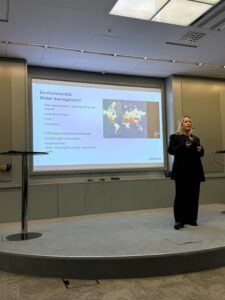
On 21 April 2026, CFA Society Sweden hosted the Nordic Investment Conference for the first time in Stockholm.

More than 150 investors, leaders, and thinkers came together at Nalen for a day of deep, meaningful conversations on the forces shaping the future of the Nordics. Across four sessions, attendees journeyed from the big external forces redefining our world, European security, geopolitics, and key market transitions, to the practical tools investors need to navigate them, including capital allocation, sustainable investing, and the evolution of factor-based investing.

The discussions were as timely as they were thought-provoking, and the energy in the room was a testament to the strength and ambition of the Nordic investment community.

None of this would have been possible without the generous support of our platinum and gold sponsors. Thank you for helping us bring it to life. A heartfelt thank you to our exceptional speakers and moderators, who brought expertise, insight, and energy to every session.

To everyone who attended, thank you.

Photos from the event are now available 

We hope to see you again next year.

CFA Institute Research Challenge 2026

0

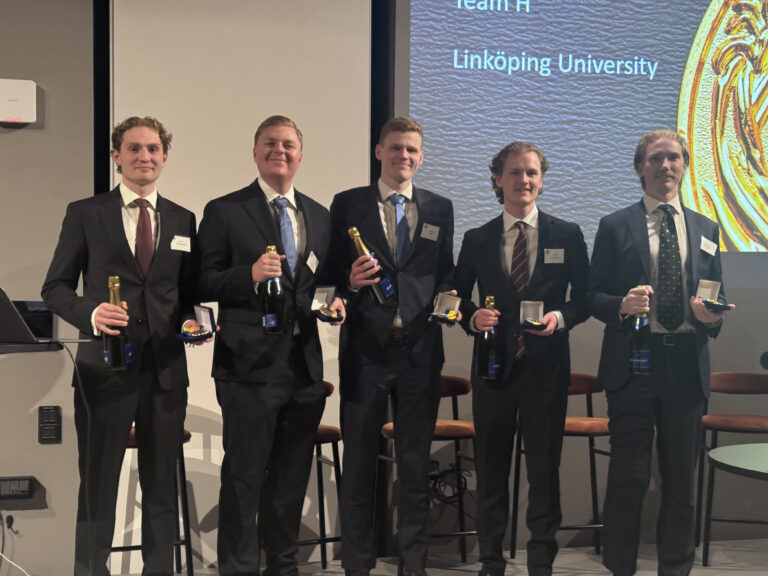
CFA Society Sweden is pleased to announce that Linköping University Team H has won the Swedish CFA Research Challenge 2026. The winning team members, including Filip Nordlander, Hannes Hjert, Hugo Striem, Jesper Nygård and Olof Sundblad have delivered a written hold recommendation on Hemnet AB and presented it to a panel of distinguished graders and judges from the investment community. The winning team was mentored by Fredrik Nilsson, CFA  and had guidance from their faculty advisor Öystein Fredriksen, Senior Lecturer in Economy and Katarina Eriksson, Associate Professor.

This year’s CFA Research Challenge was hosted by Joakim Jerner, CFA, Vice President of CFA Society Sweden and Sebastian Haq, CFA, Treasurer of CFA Society Sweden. The Board of CFA Society Sweden would like to thank all the volunteers and sponsors that made this year’s competition a great success:

• Mentors: Alf Riple, Carlos Guevara Härkönen, CFA, Erik Cederberg, Erick Mokaya, CFA, Fredrik Nilsson, CFA, Marcela Klang, Mark H. Shay, CFA, Peder Du Rietz, CFA, Rawand Sultani, CFA, Renato E. Rios, Simon Sidmalm, Tanja R Harrison, CFA and Xuli Qian, CFA.

• Graders: Alexander Richard William Richt, CFA, Aline Reichenberg Gustafsson, CFA, Anders G., Arash Yari, CFA, Mats Waldemarsson, CFA and Oleg Pavlovskyy.

• Judges: Alexandra Voss, CFA, Georg Attling and Per Haldén, CFA

Finally, we would like to thank all the students who took part in this competition.

We also extend our appreciation to this year’s partners, Quartr, FactSet and Fiscal AI for equipping students with valuable tools and providing a truly hands-on learning experience in real-world market analysis.

The following Swedish universities were represented in the CFA Institute Research Challenge:

• KTH
• Linköping University
• Stockholm University
• Stockholm School of Economics
• University West
• University of Gothenburg
• Umeå University

About the CFA Institute Research Challenge

The CFA Institute Research Challenge is an annual global competition that provides university students with hands-on mentoring and intensive training in financial analysis and professional ethics. The students are tested on their analytic, valuation, report writing, and presentation skills. They gain real-world experience as they assume the role of a research analyst. www.cfainstitute.org/researchchallenge.

Vertical Masterclass – Peak Performance & Flow States

0

We recently hosted an inspiring and practical introduction to Vertical’s neuroscience-based program with Daniel Pålsson and Achim Feige, designed to help high performers access flow states and achieve peak performance.

This engaging session combined cutting-edge theory with hands-on practice, offering attendees simple yet powerful techniques they can now integrate into their daily routines before, during, or after the workday.

Here’s what we explored together:

  • What a flow state is and how to access it
  • Why training the nervous system is essential for high performance
  • How flow states bridge the gap between well-being and peak output
  • The crucial link between quality sleep and sustained performance
  • Practical breathing and movement tests
  • Proven breath training to support mental clarity and resilience

Thanks to everyone who participated! You can now watch the webinar on our YouTube channel and access the presentation here.


The Future of Emerging Markets and The Rise of a Digital India

0

We were joined by Kevin T. Carter for an insightful webinar on global digitization, held on Zoom. Kevin T. Carter, Founder & CIO of EMQQ Global, has spent over 20 years investing in this evolution alongside Princeton economist Dr. Burton Malkiel. Their work helped pioneer fractional share trading and direct indexing before shifting focus to China and emerging markets ETFs.

You can find the presentation here.

Forecast Dinner 2025 – Photo Gallery

0

IÄF – The Institutional Owners Association Wins CFA Sweden ESG Award 2024

0

Stockholm, 9 May 2025 – Each year, CFA Society Sweden honors outstanding contributions to the integration of Environmental, Social, and Governance (ESG) and sustainability considerations in the investment industry through the CFA Sweden ESG Award. The 2024 award was presented to Institutionella Ägares Förening (The Institutional Owners Association – IÄF) during the Society’s Annual Forecast Dinner on May 8 in Stockholm. Anna Magnusson, Chief Active Ownership Officer at Första AP-Fonden (AP1) and member of the board of IÄF attended the event to receive the prize on behalf of the association.

John Howchin, member of CFA Society Sweden’s ESG Committee and responsible for the Award’s nomination process, commented on the decision to honor IÄF: “The Institutional Owners Association has demonstrated clear and actionable leadership in integrating sustainability into financial decision-making. By uniting major Swedish institutional investors around a shared expectation that corporate boards link executive compensation to material sustainability goals, IÄF is advancing long-term value creation. Their insistence on relevance, transparency, and alignment between sustainability targets and financial performance sets a new standard for responsible ownership and corporate governance in Sweden. IÄF’s initiative serves as a model for how investors can drive positive change and promote sustainable development across the business sector.”

IÄF is a non-profit association founded in 2003 by major institutional investors in Sweden. Its purpose is to safeguard its members’ interests as institutional owners in the Swedish equity market by promoting the sound development of self-regulation within the market.  IÄF fulfils this role primarily by participating in Sweden’s self-regulatory market bodies when appropriate, and by nominating or appointing representatives to boards and other governance functions.

The members of IÄF are Alecta, AFA, AMF, Första AP-fonden (AP1), Andra AP-fonden (AP2), Tredje AP-fonden (AP3), Fjärde AP-fonden (AP4), Carnegie Fonder, Folksam, Handelsbanken Fonder, Lannebo, Länsförsäkringar, Nordea Fonder, SEB Investment Management, Skandia and Swedbank Robur Fonder.

Previous recipients of the CFA Sweden ESG Award are:

  • 2023 – Global Child Forum
  • 2022 – ChemSec – the International Chemical Secretariat
  • 2021 – Anthropocene Fixed Income Institute and Ulf Erlandsson
  • 2018 – Norrsken Foundation
  • 2017 – Corporate Human Rights Benchmark (CHRB)
  • 2016 – Örebro Kommun and Region Västmanland
  • 2015 – Steven Smit, Morningstar
  • 2014 – Mats Andersson, AP4, Liza Jonson, Storebrand AM and Gunella Hahn, Svenska Kyrkan
  • 2013 – Hennes & Mauritz AB
  • 2012 – Peter Norman, Finansdepartementet
  • 2011 – Gunilla Hjalmarsson, Meta AM. and Anna Nilsson, Swedbank Robur
  • 2010 – Sasja Beslik, Nordea Investment Management


For media inquiries, please contact:

President: David Krook, CFA
Vice President:  Alexandra Voss, CFA.
CFA Society Sweden: info@cfasweden.se

About CFA Society Sweden:

 CFA Society Sweden is a not-for-profit organisation of investment professionals based in Sweden, founded in 2003. It aims to promote a high level of professionalism among its members and the broader investment community. The organisation has 165 members who are CFA Charterholders. A CFA Charterholder is a person who has successfully completed the CFA program, which is considered amongst the most challenging financial exams in the world. There are currently over 150,000 CFA Charterholders worldwide. The CFA program is administered by the CFA Institute.

About CFA Society Sweden’s ESG Committee:

The CFA Society Sweden’s ESG Committee is composed of engaged members of CFA Society Sweden who have a strong interest in the promotion of high-quality education and in supporting sound ESG standards in the analysis of financial investments. The ESG Committee is chaired by Simone Hirschvogl, CFA. The committee’s longest-standing member is John Howchin, former Secretary-General of the Council on Ethics for the First, Second, Third, and Fourth Swedish National Pension Funds. Currently, he oversees sector strategy for the work on the Transition Decade project with a focus on the hard-to-abate sectors at IIGCC and for the Climate Action100+ project, among many other engagements. Howchin is responsible for the ESG Award’s nomination process.

Breakfast Seminar on Fixed Income Relative Value with Capula Investment Management

0

During the breakfast seminar we had on March 11th, Trevor Pugh from Capula Investment Management shared valuable insights on structuring relative value trades and managing the associated risks. He also provided important market context on fiscal policy and bond issuance outlooks, highlighting the opportunities and challenges within the strategy.

We would like to sincerely thank everyone who attended and contributed to the discussion. We hope you found the session insightful and look forward to welcoming you to future events!

Upcoming Events